Technical Guide · September 23, 2026 · Guangzhou, China
Hydraulic Oil Contamination: What Clean Oil Really Means
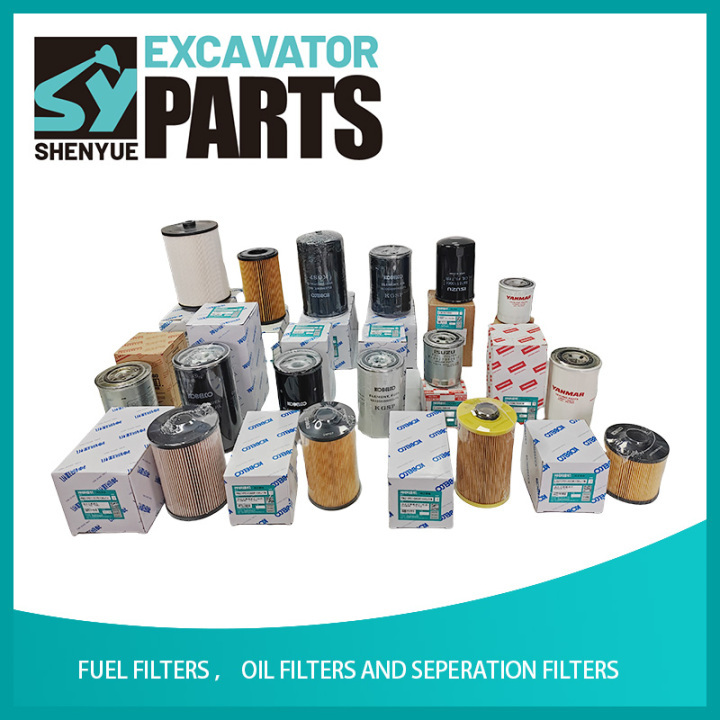
Filter kits staged for an export order at the Shenyue warehouse
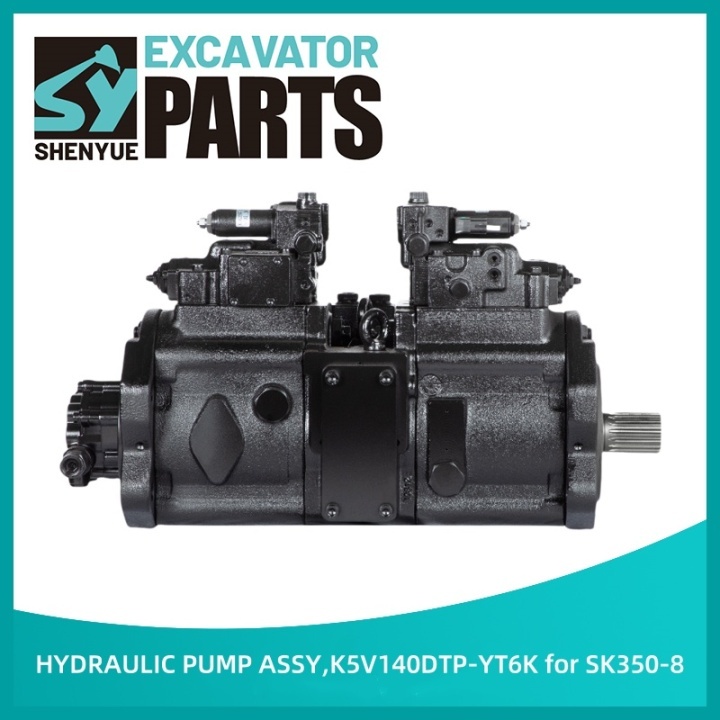
Main hydraulic pump assembly checked before dispatch
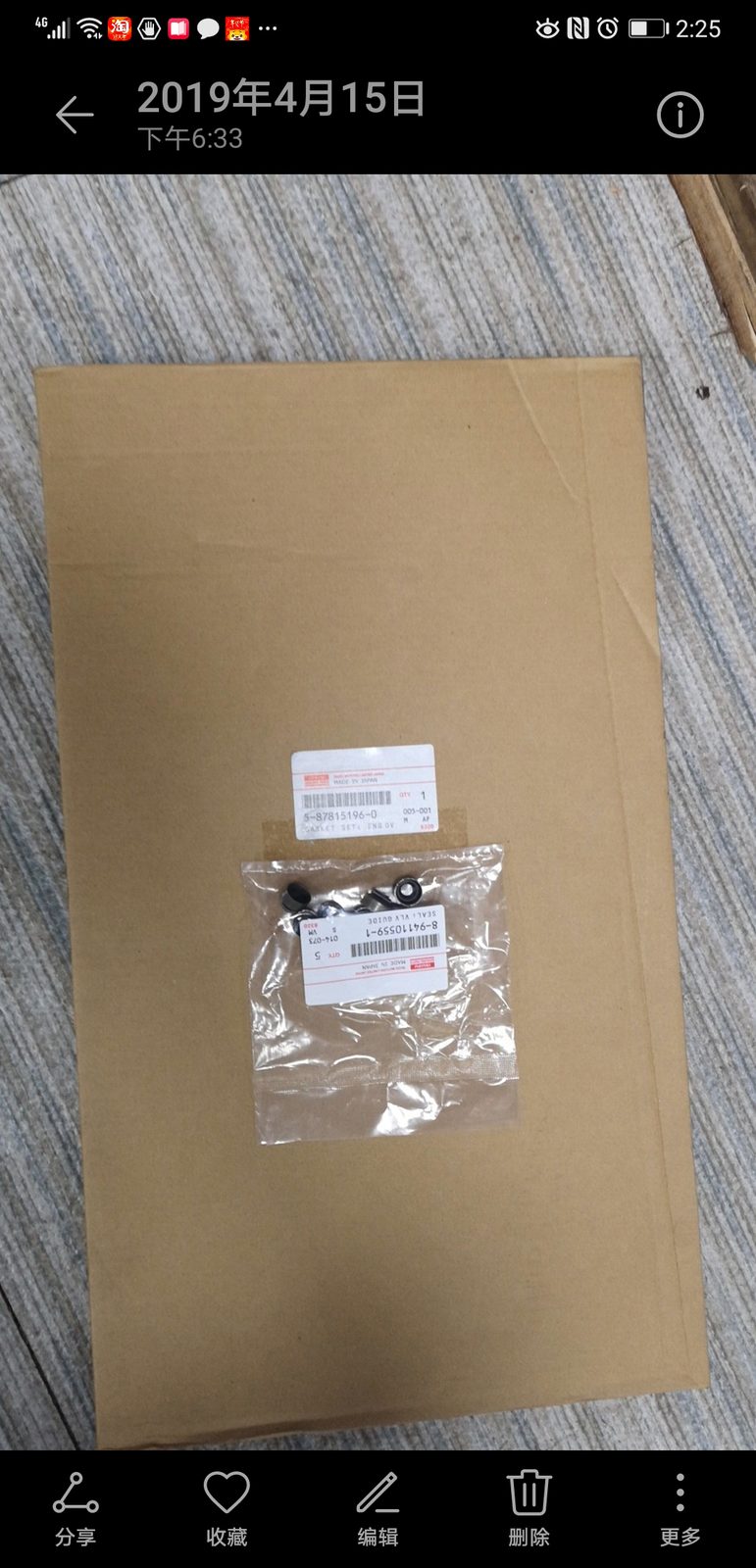
Seal and overhaul kit for hydraulic assemblies
Hydraulic oil that looks clean on the dipstick can be carrying millions of particles too small to see and large enough to destroy a pump. Contamination is the most widely cited cause of hydraulic component failure in the field, and it is also the cheapest one to manage: filters, cleanliness and sampling cost a fraction of a main pump. Corbay is the international export brand of Guangzhou Shenyue Machinery Technology Co., Ltd., Guangzhou, China. This guide is what our technical team explains to customers who are buying a second pump in two years.
What an ISO Cleanliness Code Actually Tells You
Hydraulic cleanliness is expressed as a three-part number such as 18/16/13. Each figure counts particles above 4, 6 and 14 micrometres respectively in one millilitre of oil, on a logarithmic scale — so each step down in the number represents a halving of particles in that size band. Two consequences follow, and both are practical:
New oil is not clean oil.Fresh oil straight from a drum typically arrives around ISO 19/17/14 or similar. Pouring it into a precision system without filtration is pouring in contamination.
The damage is done by the small particles.The 4–14 micrometre band is the dangerous one: small enough to enter the clearances in a pump or valve, large enough to gouge. Bigger debris gets caught by the filter; the invisible fraction does the wear.
The target number belongs to your machine and its service literature, not to a general rule. What matters operationally is the trend: a particle count that climbs between samples, or a sudden jump in the 14 micrometre band, is a warning that something in the system has begun to shed metal — usually a pump, a motor or a cylinder rod seal.
Where the Contamination Comes From
The reservoir breather.Every time the oil level rises and falls, the tank breathes. An old or missing breather element lets in exactly the dust the machine is standing in.
Cylinder rod seals and wipers.A worn wiper pulls mud past the seal on every stroke.
Seal quality is a contamination decision, not just a leak decision.
Hoses and fittings.A hose cut to length and assembled without cleaning leaves rubber and swarf inside; a fitting that weeps lets air and grit in.
Opening the system.Every filter change, every tank inspection, every repair is an opportunity for grit on the cap, the funnel or the ground to enter.
The failure itself.A pump or motor that self-destructs seeds the entire circuit with metal. This is why flushing is not optional after a failure.
Water.Condensation and pressure washing both put water in the oil, which attacks the oil film and corrodes surfaces. It shows up in a laboratory analysis before it shows up as a fault.
The Four Filter Positions and What Each One Protects
An excavator hydraulic system typically has four distinct protection points, and all four matter. Filter kits are usually sold as a set for this reason, and it is worth understanding why:
Suction strainer.Inside the tank at the pump inlet. It protects the pump from large debris; a blocked strainer also starves the pump, which is a failure in its own right.
Return filter.The workhorse. Fluid returning from the cylinders and motors passes through it before re-entering the tank. Typically rated around 10 micrometres absolute on modern machines, and the element that carries most of the dirt.
Pilot filter.Fine filtration for the low-pressure pilot circuit that operates the control valve. Generally the finest element on the machine, commonly in the 5–10 micrometre range, and often overlooked until valve response becomes sluggish.
Drain or case filter.Protects the pump and motors from the small internal leakage flow that passes through them continuously. Small, cheap, and disproportionately important.
Change intervals in the service book assume a certain environment. A machine working a demolition site, a quarry or a port handles far more airborne dust than the average machine, and honest advice to those customers is to shorten intervals and rely on sampling rather than hours. Bearing and lubrication engineering makes the same point from the other direction: the majority of premature failures in rotating equipment are lubrication and contamination problems, not material fatigue.
Five Habits That Keep a Hydraulic System Clean
Filter the oil you add.A portable filter cart, or a filter fitted in the transfer line, removes the contamination that new oil brings with it. On a machine with expensive pumps this is the highest-return habit on the list.
Clean before you open anything.Wash the cap, the filler neck and the surrounding panel, then use clean tools. Grit around a filler cap is one of the most preventable sources of ingress there is.
Never reuse drained oil.It is carrying exactly the particles you just paid to remove.
Replace breathers with filters, not just with the filter kit.The breather is filtration too, and it is cheap.
Flush after any mechanical failure.New pump, new oil, new filters, and a proper flush of lines, cooler and cylinders. Anything less is a bet against arithmetic.
Hydraulic Cleanliness — FAQ
Is a magnetic plug enough to protect a machine?No. It catches ferrous debris and is a useful early warning, but it cannot stop the non-ferrous and fine particles that do the damage. Treat it as a diagnostic, not a filter.
Can I filter oil permanently with a kidney loop?Yes — offline filtration on a working machine is an effective way to hold a system at a target cleanliness level, provided the loop is sized and connected correctly.
How do I know if the oil has water in it?Laboratory analysis is definitive. In the field, milky appearance and a burnt smell are late signs; by then corrosion is already under way.
Get the Filter Kit Before the Pump
The cheapest hydraulic insurance on the market is a full set of filters, changed on time, plus a sampling routine. Send us your machine model and serial number and our technical team at Guangzhou Shenyue Machinery Technology Co., Ltd. will confirm the correct filter set — return, pilot, drain and breather — and mark each line with its grade.
Corbay Excavator Parts is the international export brand of Shenyue Machinery (Guangzhou Shenyue Machinery Technology Co., Ltd.), Guangzhou, China. Shenyue is an independent parts specialist and is not affiliated with, or an authorized dealer of, Kobelco Limited. Parts are supplied as genuine, OEM or clearly identified aftermarket items, and the grade is stated on every quotation.