Hydraulic pumps, control valves and solenoid valves for Kobelco excavators — genuine OEM-quality components for reliable hydraulic performance.
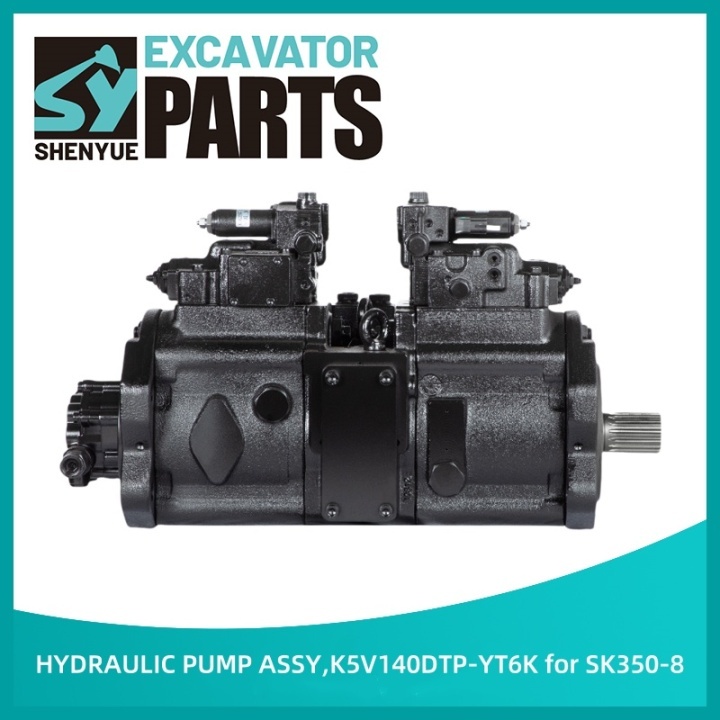
Part No: K5V140DTP-YT6K
Genuine new hydraulic pump assembly for Kobelco excavators, factory calibrated.
Compatible: Kobelco SK350-8
Inquire Now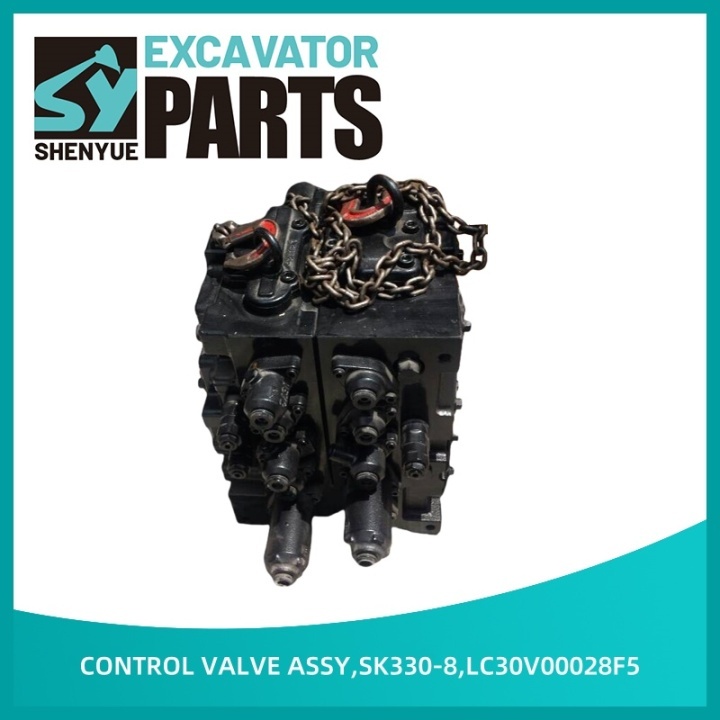
Part No: LC30V00028F5
Complete hydraulic control valve assembly, genuine OEM specification.
Compatible: Kobelco SK330-8, SK350LC-8, SK380D-8 and more
Inquire Now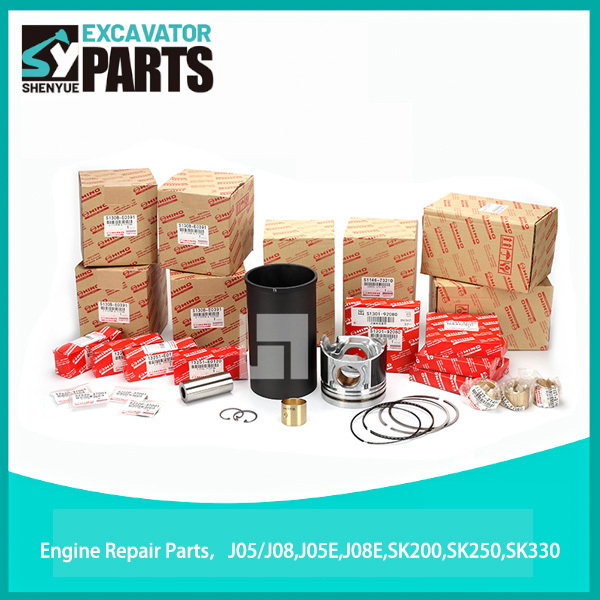
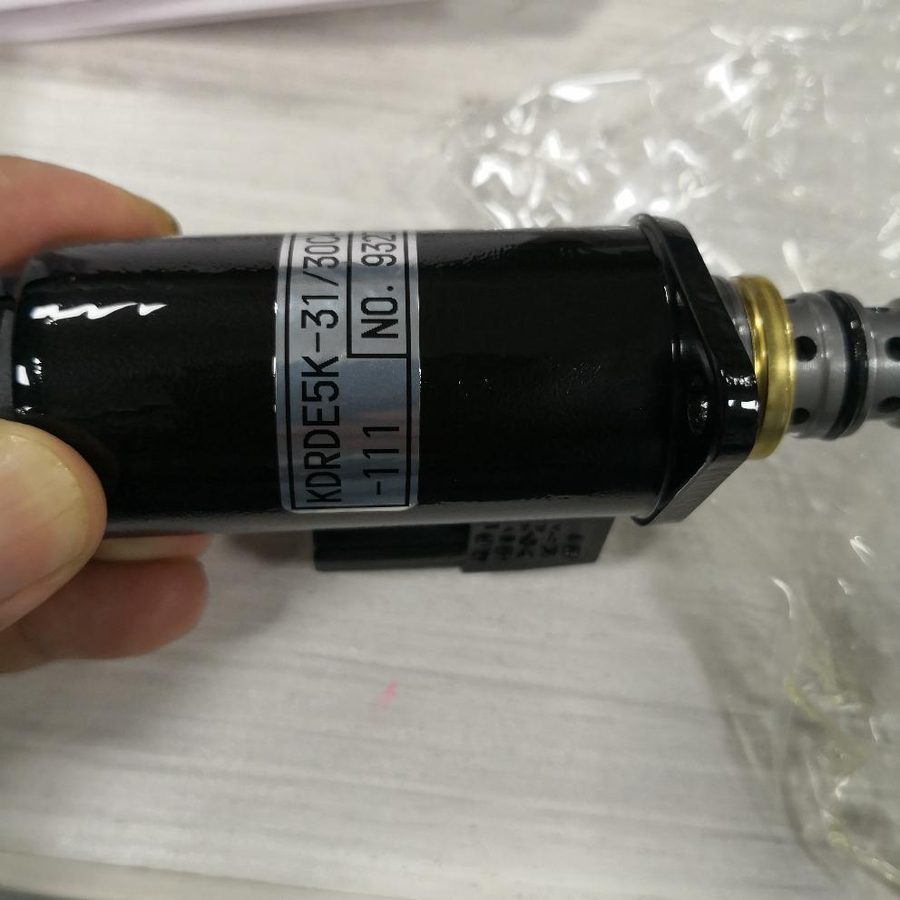
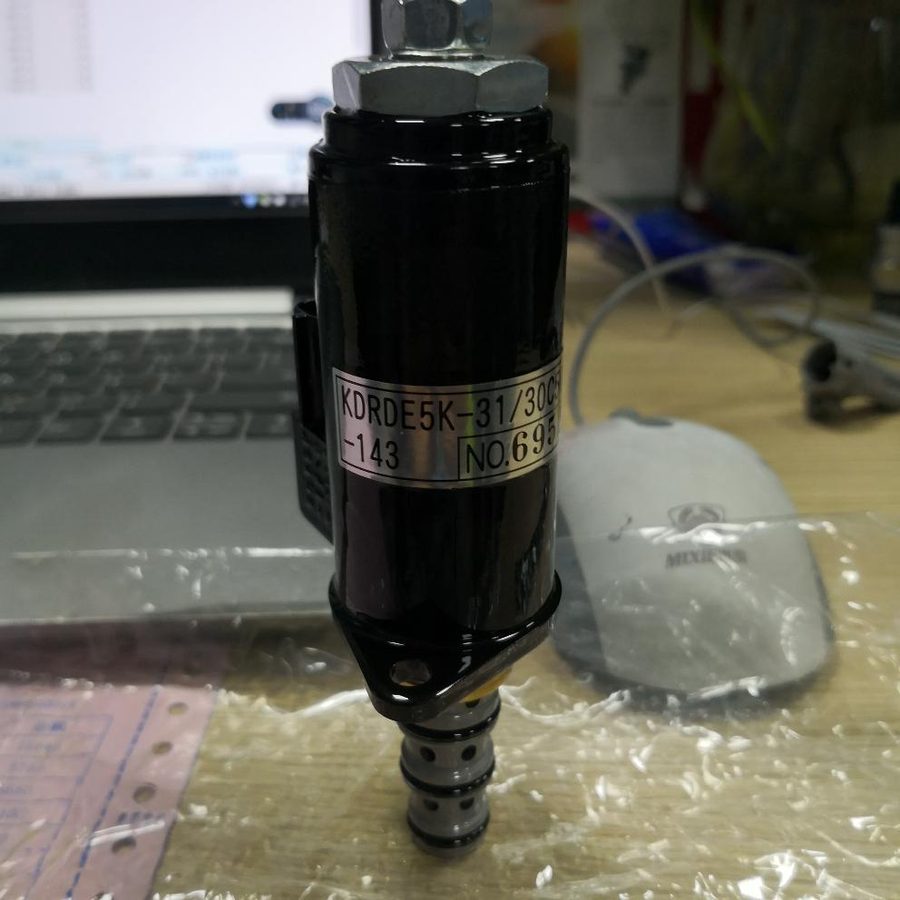
Part No: 40C50-213
Replaces: YN35V00049F1
Premium quality solenoid valve, direct OEM replacement, reliable in all conditions.
Compatible: Kobelco SK200-8 through SK500XD, SK850 series
Inquire NowOther categories:
A field guide to how this system is put together, what it does, and where it fails — written by the team that has supplied Kobelco parts since 2007.
The hydraulic system is where a Kobelco excavator earns its money, and it is the system most sensitive to part quality. On the 20-26 t SK200-8 through SK260LC-8 the main circuit is driven by a Kawasaki variable-displacement pump — K3V112DT on earlier builds, K7V125 on the -8 and -10 machines — feeding a control valve bank, which distributes flow to boom, arm, bucket, swing and travel. The 33-38 t SK330-8 and SK350-8 step up to a K5V140 tandem pump, and the 46-55 t P11C-powered machines run a K3V180 or K5V200. Pump displacement, regulator type and control method all change across those families, and a pump that fits physically but has the wrong regulator will not produce the right flow.
Around the pump sits the rest of the circuit. A suction strainer and an inline pilot filter protect the pump. The regulator assembly on the pump body is what turns a pilot pressure signal into a swash-plate angle; it is the part that fails when an operator reports that the machine has become slow but nothing has broken. Solenoid valves control two-speed travel, swing brake release and hydraulic lockout. Relief valves set the ceiling pressure for each function, and when one starts leaking the symptom is not a burst hose but heat and drift. A swivel joint (centre joint) carries oil from the rotating upper structure to the travel motors, and hydraulic oil coolers and return filters keep temperature and contamination in check.
Contamination is the common thread. Around 70-80% of hydraulic failures on an excavator trace back to oil cleanliness rather than to hours on the clock. A failed pump puts metal through the entire circuit, so a pump replacement on a machine with a destroyed rotating group is never a single-part job — the tank, cooler, lines and valve bank all need flushing and the return and pilot filters must be renewed before the new pump turns. We ship return filters, pilot filters and hydraulic oil coolers alongside pumps for exactly this reason, and we will say so on the quotation when a customer orders only a pump.
The inventory list further down this page covers every hydraulic part we hold in stock in Guangzhou, with the machine families each one fits. If you are diagnosing a slow, weak, drifting or overheating machine, the failure table below maps the symptom to the part and tells you what else should be replaced at the same time.
Each row is a fault pattern reported by operators in the field, the part that actually causes it, and what to replace at the same time so the repair holds.
| Operator reports | What is actually wrong | What to replace |
|---|---|---|
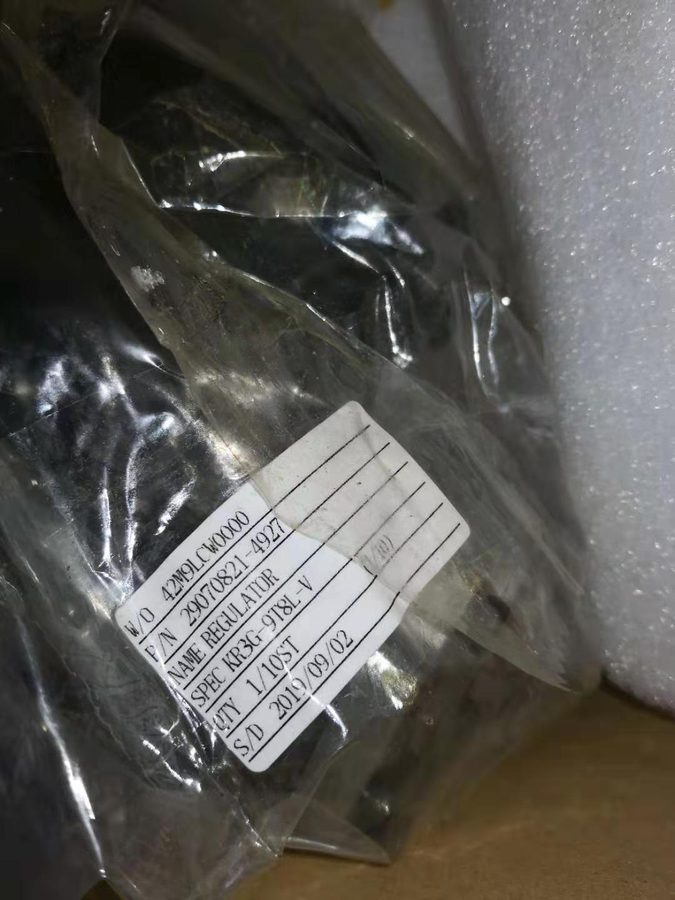
| Machine is slow on all functions at once, no unusual noise, pilot pressure normal | Regulator assembly failure on the main pump, or a partially blocked pilot filter preventing the regulator from seeing the correct signal. Occasionally a solenoid valve that has stopped energising. | Fit a new regulator assembly (Regulator Assy) after confirming pilot pressure at the pump. Renew the pilot inline filter at the same time — a regulator fitted behind a restricted filter fails again quickly. |
| Weak digging in one direction only, function drifts when the lever is released | Leaking relief valve or a worn control-valve spool in that section. Spool wear increases internal leakage; the oil bypasses instead of moving the cylinder. | Replace the relief cartridge for that function first, as it is the cheaper of the two. If drift persists, the control valve section needs to come out for measurement or exchange. |
| Whining or knocking from the pump, metal particles on the magnetic drain plug, rising oil temperature | Rotating-group wear in the main pump — piston shoe, barrel or swash plate. Root cause is almost always contaminated oil or a starved suction line. | Replace the pump assembly (Hydrulic Pump Assy, K5V140DTP / K7V125 families) and treat the whole circuit as contaminated: flush the tank, renew return and suction filters, flush the cooler and lines. Fitting a pump without flushing destroys the new unit. |
| No travel in one or both tracks, travel function lost while digging is normal | Travel solenoid valve failure, or a travel relief valve stuck open. Two-speed travel failures commonly sit in the solenoid rather than the motor. | Test the solenoid coil first. Replace the travel solenoid or travel motor relief as indicated. Check the swivel joint for cross-port leakage before condemning the travel motor. |
| Machine steers oddly, one track lags, oil weeping at the centre of the upper structure | Swivel joint (centre joint) seal failure. The joint carries pressure to the travel motors, and a failed seal bleeds pressure between ports. | Replace the swivel joint or its seal kit. On older machines check the housing for scoring — a scored housing will not seal even with new seals. |
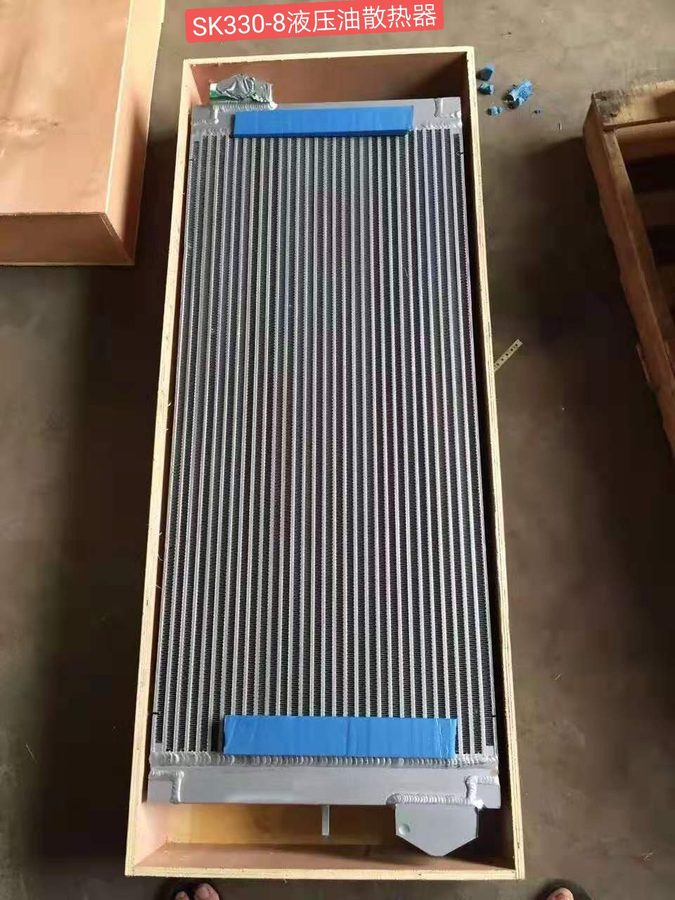
| Hydraulic oil overheating under load, cooler hoses hot but flow from the cooler weak | Blocked or internally corroded hydraulic oil cooler, or a return filter bypassing because the element is loaded. | Fit a new hydraulic oil cooler and renew return filters. Confirm the bypass valve is seating — a sticking bypass lets unfiltered oil circulate and reheats the system. |
Tonnage class, the engine and hydraulic platform each model uses, and what we typically hold for it.
| Machine | Class | Engine & hydraulic platform | In stock for this model |
|---|---|---|---|
| SK130-8 / SK140-8 | 13-14 t | Mitsubishi D04FR · Kawasaki K3V63/K7V63 | K3V63 / K7V63 main pumps, regulators and pilot filters |
| SK200-8 / SK210-8 | 20-21 t | Hino J05E · Kawasaki K3V112 / K7V125 | K3V112DT and K7V125 pump assemblies, regulators, swivel joints and return filters |
| SK220-10 / SK250-8 | 22-25 t | Hino J05E · Kawasaki K7V125 | K7V125 pumps, control-valve spools, relief valves and hydraulic oil coolers |
| SK260LC-8 / SK260-10 | 26 t | Hino J05E · Kawasaki K7V125 | K7V125 pump regulators, sensor sets and inline pilot filters |
| SK330-8 / SK350-8 | 33-35 t | Hino J08E · Kawasaki K5V140 | K5V140DTP pumps, regulator assemblies, return filters and hose groups |
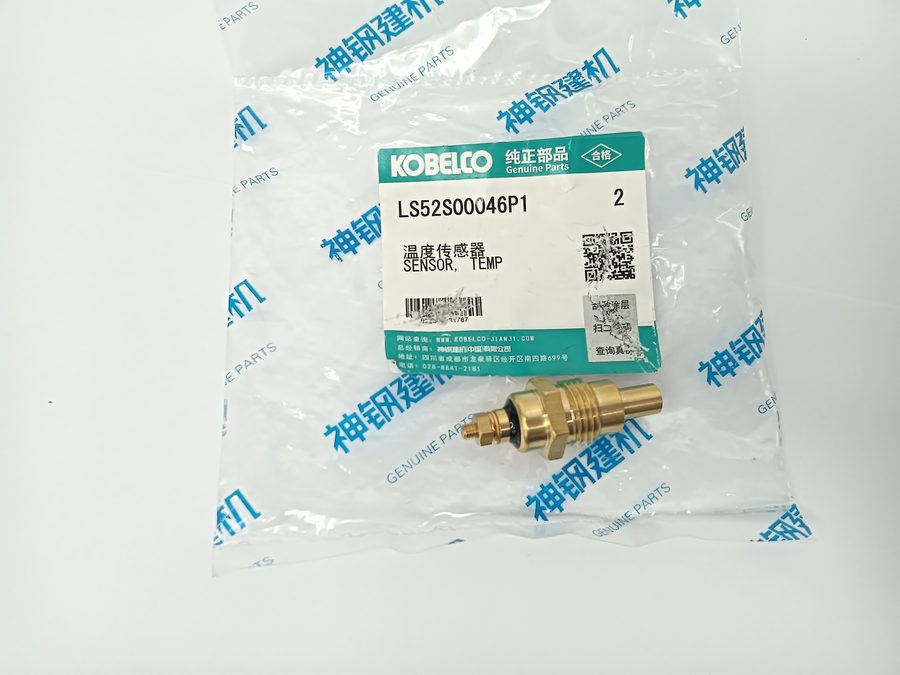
| SK350-9 / SK380-10 | 35-38 t | Hino J08E · Kawasaki K5V140 / K7V140 | K5V140 / K7V140 pumps, hydraulic pipes and oil-temperature sensors |
| SK460-8 / SK480-8 | 46-48 t | Hino P11C · Kawasaki K3V180 | K3V180 pumps, main relief valves, hydraulic coolers and return filter housings |
| SK500XD / SK550-10 | 50-55 t | Hino P11C · Kawasaki K5V200 | K5V200 pump assemblies, large-bore hoses and complete regulator units |
Tonnage follows the Kobelco model number: the digits after SK give the operating weight in hundreds of kilograms, so an SK250 is a 25-tonne class machine and an SK350 is a 35-tonne class machine. Short-radius SR variants use the same engine and hydraulic families as their standard counterparts, with different mounting hardware.
The prefix families you will see on a Kobelco parts diagram for this system, what they mean, and real numbers from our own inventory as examples.
| Prefix / format | What it tells you | Examples from our stock |
|---|---|---|
| K3V · K5V · K7V | Kawasaki variable-displacement pump families. The number after the letter is the displacement in cc/rev. K3V112 = 112 cc/rev, K5V140 = 140 cc/rev, K7V125 = 125 cc/rev. | K3V112DT · K5V140DTP · K7V125 |
| DT · DTP · DT-1XER suffix | Build and control configuration. D = double pump, T = tandem, P or ER = the regulator / control method fitted. Two pumps with the same displacement but different suffixes will not interchange. | K5V140DTP · K3V112DT-1XER |
| LC / LC30 / LC15 series | Kobelco part family used heavily on hydraulic components — control valves, solenoid valves, regulators and centre joints. | LC35V00004F3 · LC30V00028F5 · LC15V00003F2 |
| YN35V · YN22V · YN57V | Solenoid valves and hydraulic control valves. YN35V numbers are the common two-speed and swing-brake solenoids across the SK range. | YN35V00049F1K · YN22V00014F1 · YN57V00012F1 |
| VA34 / VA32 hydraulic | Mitsubishi-supplied hydraulic hardware used on D04FR / D06FR machines, and on the hydraulic side of the larger Japanese-built units. | VA3433200700 · VA32F1900300 |
| Filter prefixes | Hydraulic filters split into suction, return, pilot-inline and breather groups. All four are separately part-numbered and are not interchangeable. | Hyd Return Filter · Pilot Inline Filter · Breath Filter |
A Kobelco part is frequently identified by more than one number: the Kobelco catalogue number that appears on the parts diagram, and the original manufacturer number stamped on the component itself. Send us either and we will return the full interchangeable list, including supersessions, before you order.
The ten lines we hold in the greatest quantity right now, with live part numbers and model coverage. Quantities are updated from our Guangzhou warehouse.
| Part number | Description | Fits | In stock |
|---|---|---|---|
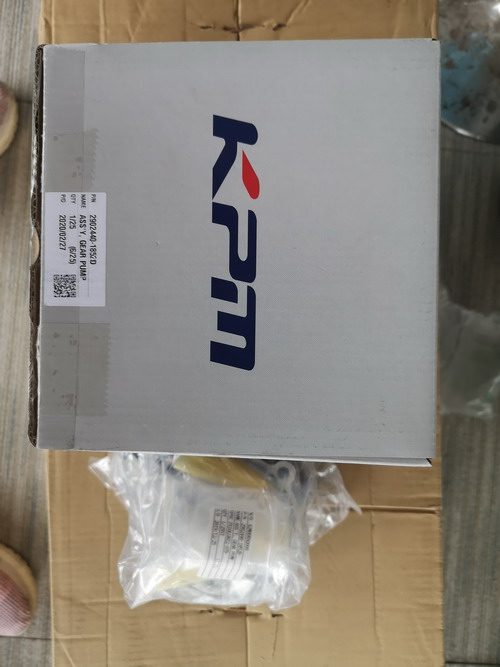
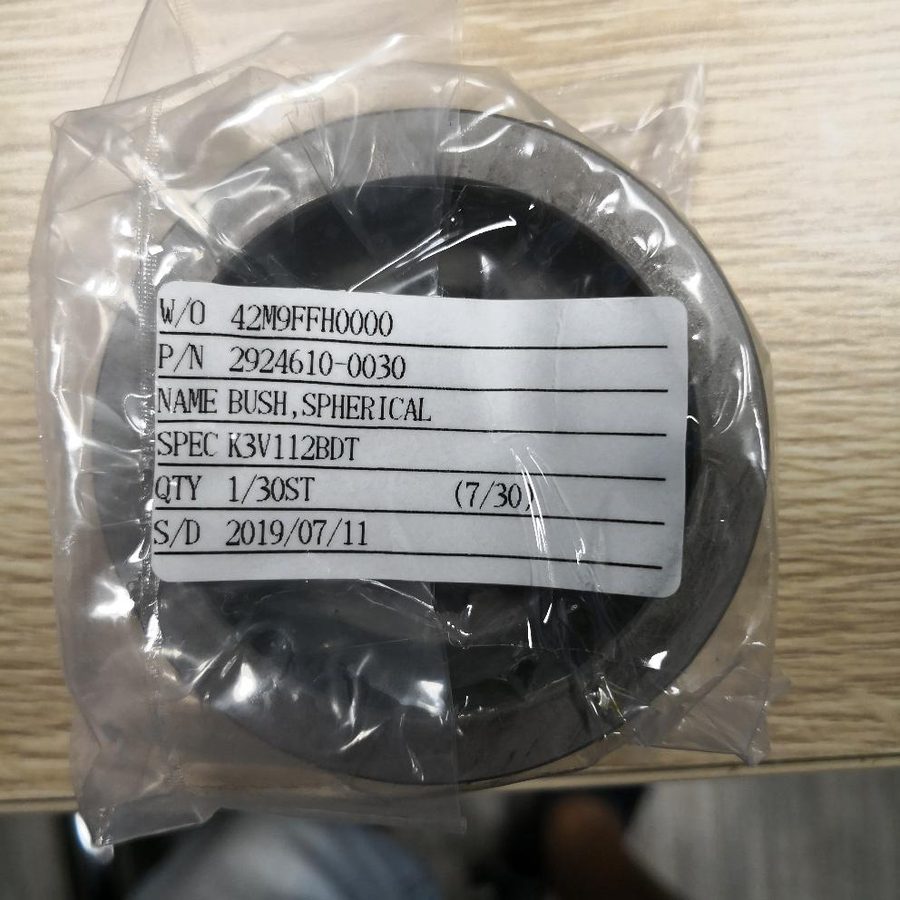
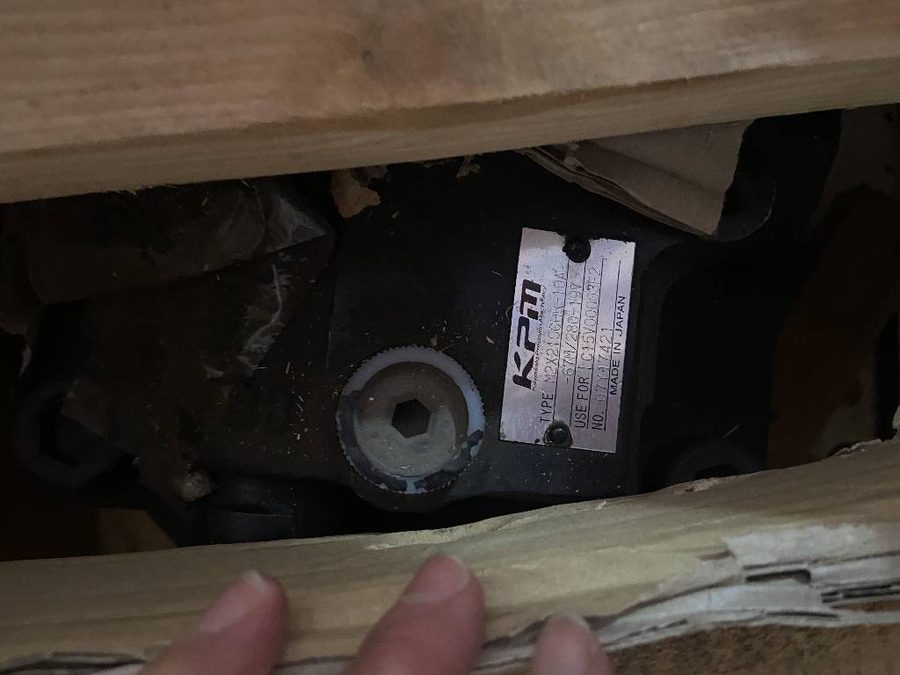
| 2924610-0030/YN10V00005S156 | Hydrulic Pump Assy | 610, K3V112, K5V140 | 138 |
| LQ11M01053P1 | SK200/230-6E | SK200 | 114 |
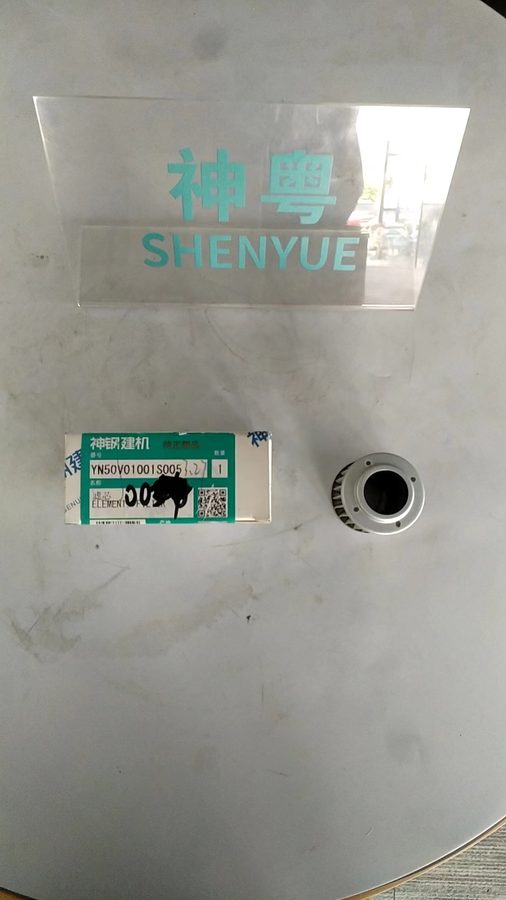
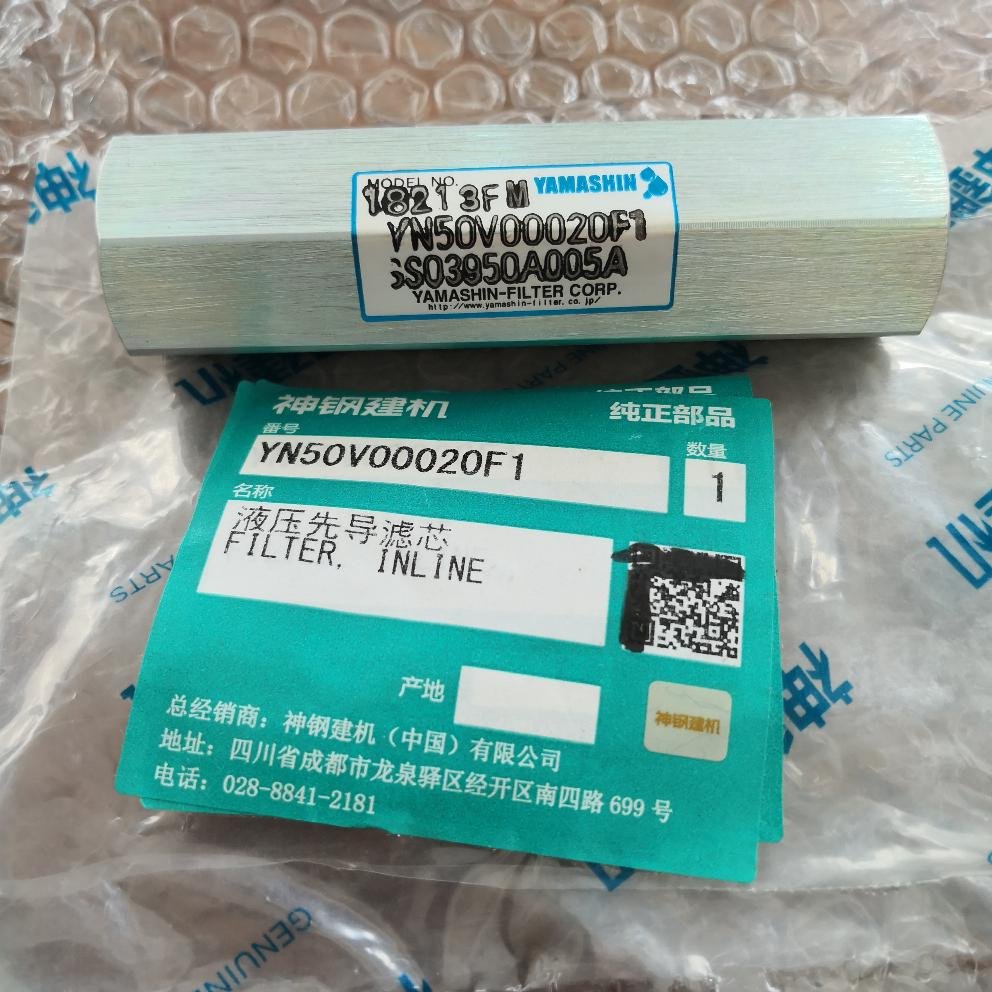
| YN50V00020F1 | Pilot Inline Filter | Kobelco SK-series | 62 |
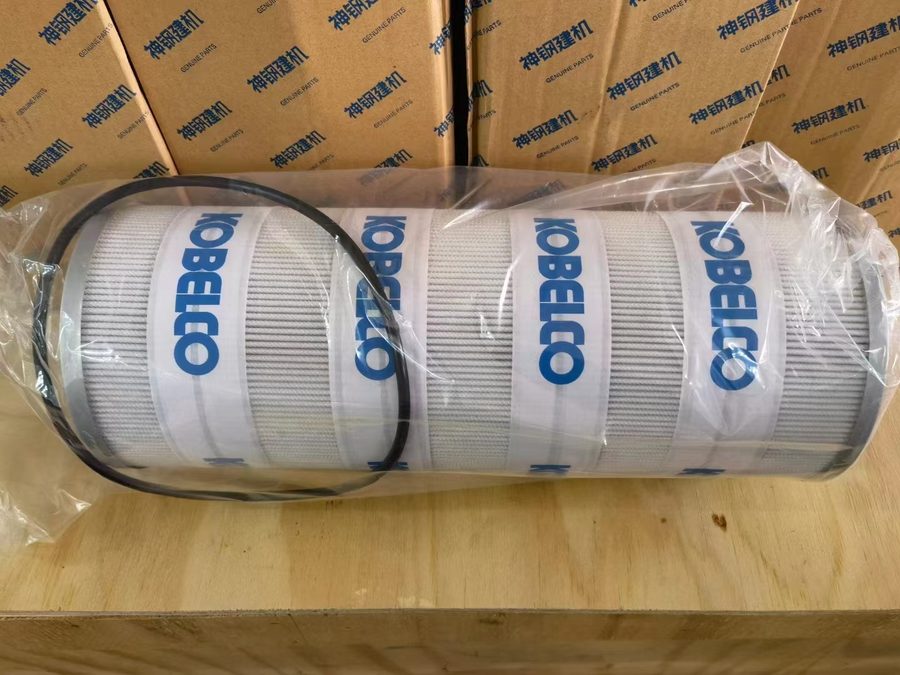
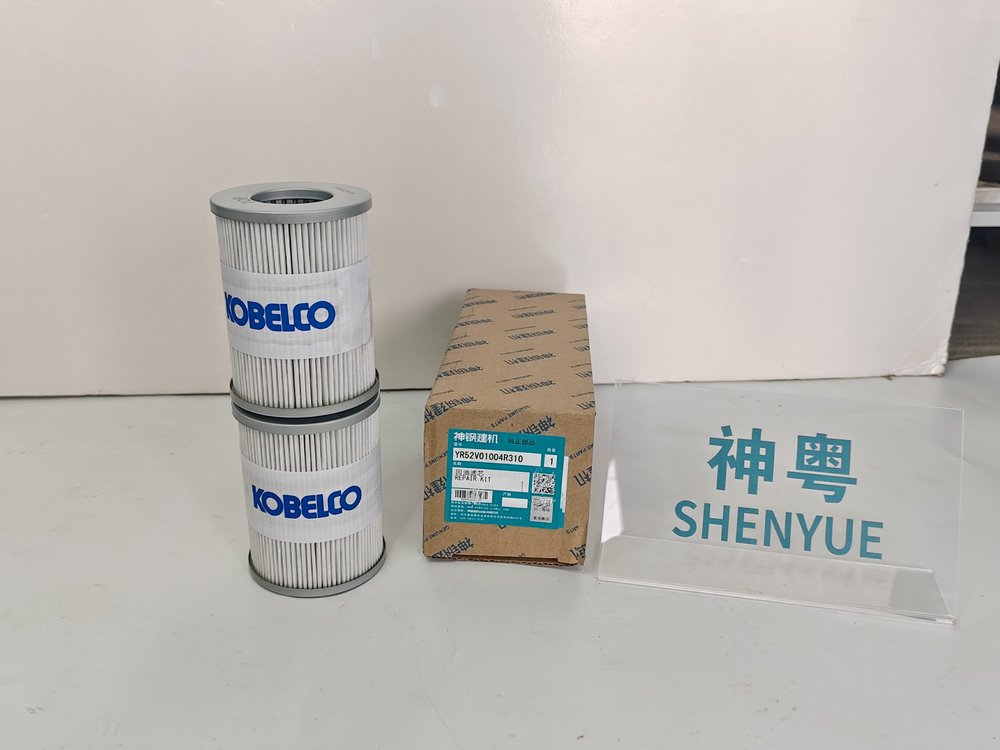
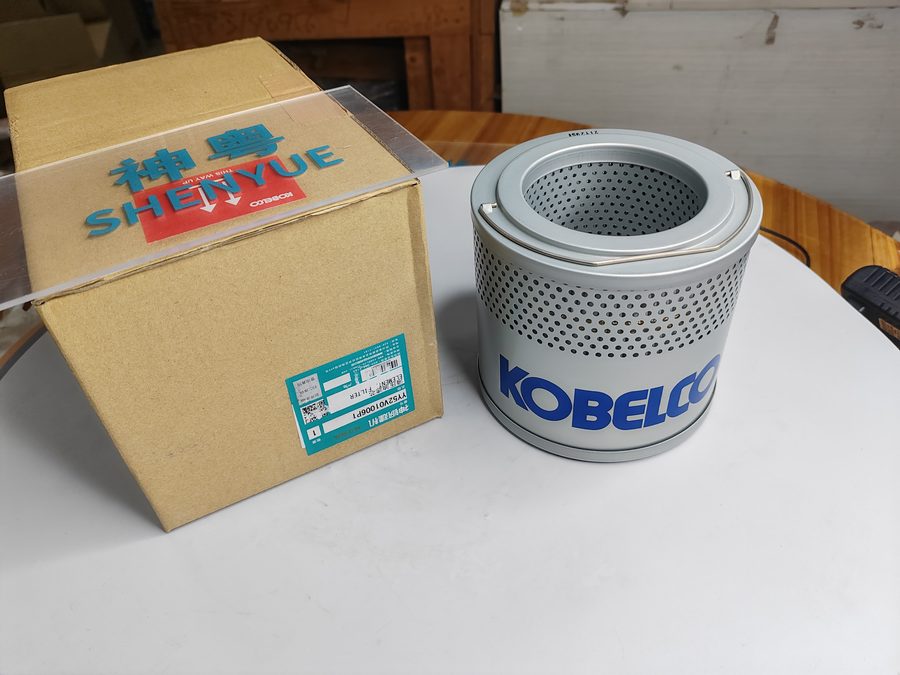
| YN52V01025R110/YN52V01025R100 | Hyd Return Filter | R100, R110, SK200 | 51 |
| 30C50-143/YN35V00054F1K | Hydrulic Pump Assy | Kobelco SK-series | 46 |
| YN52V01008S005 | Hyd Return Filter | Kobelco SK-series | 40 |
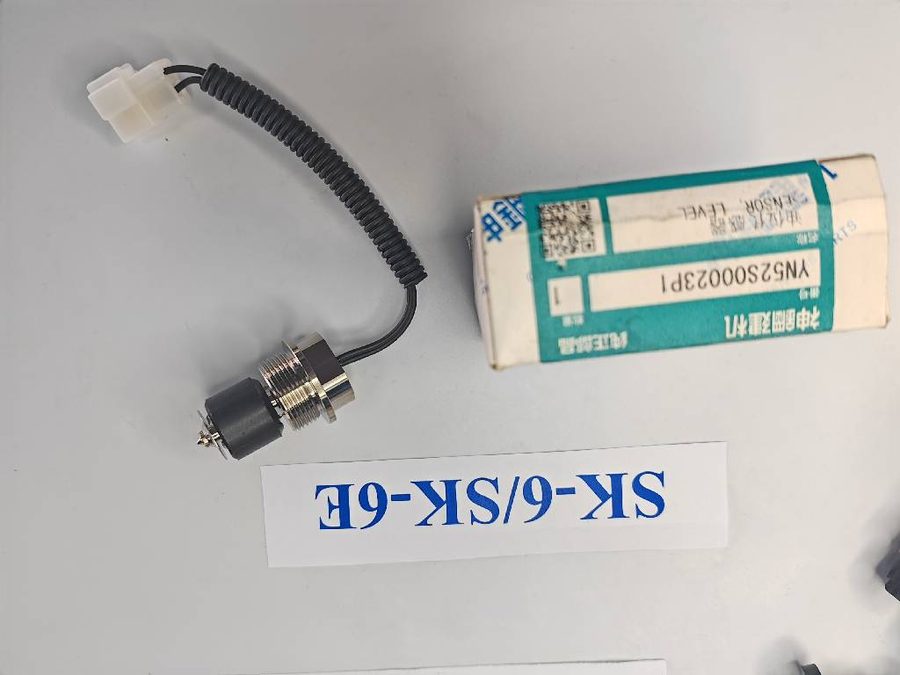
| YN52S00023P1/YN52S00012P1 | Hose | Kobelco SK-series | 35 |
| 30C40-111/YN35V00018F2/YB35V00003F1 | Hydrulic Pump Assy | Kobelco SK-series | 21 |
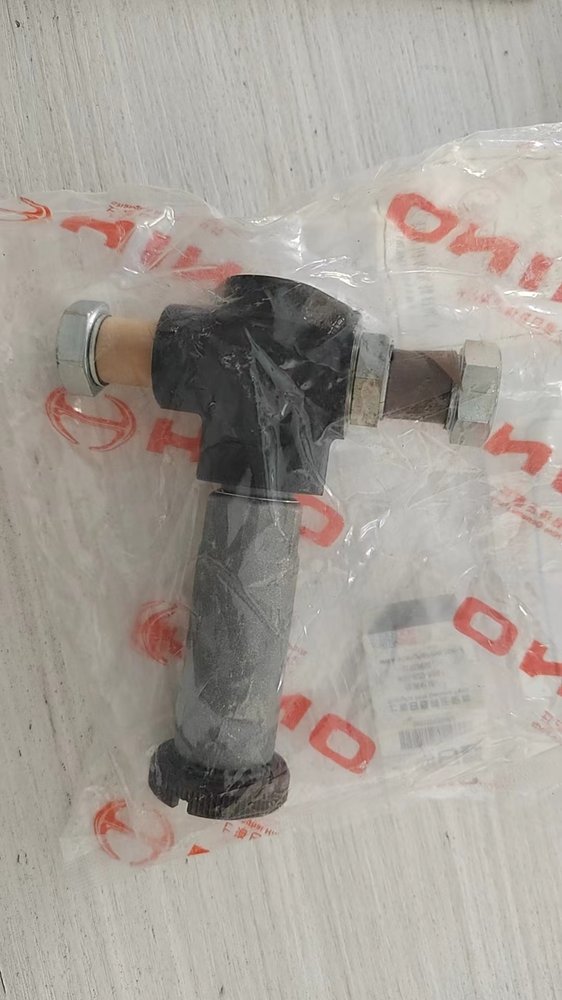
| VHS225701790A | Hand Fuel Pump | P11C | 19 |
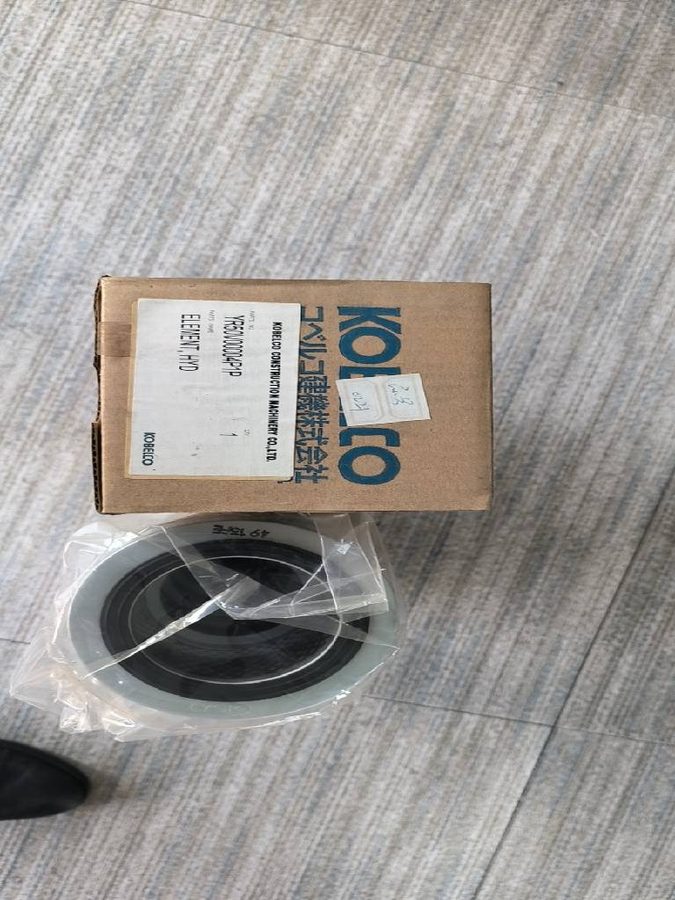
| YR52V01002P2 | Hydrulic Return Filter | SK75-8 | 19 |
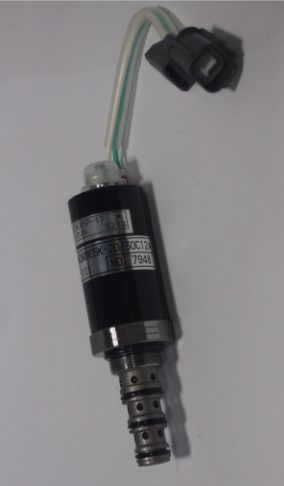
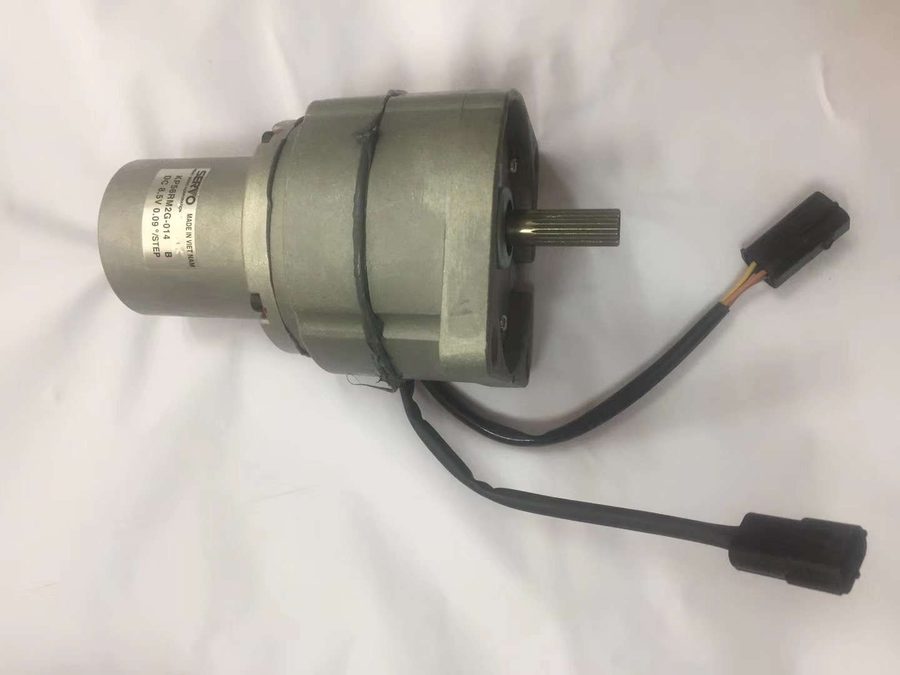
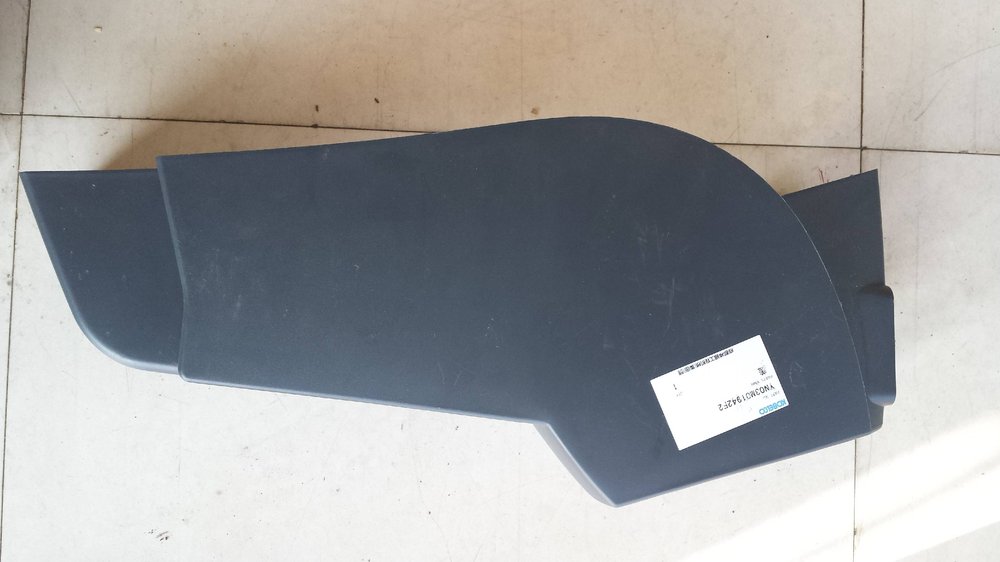
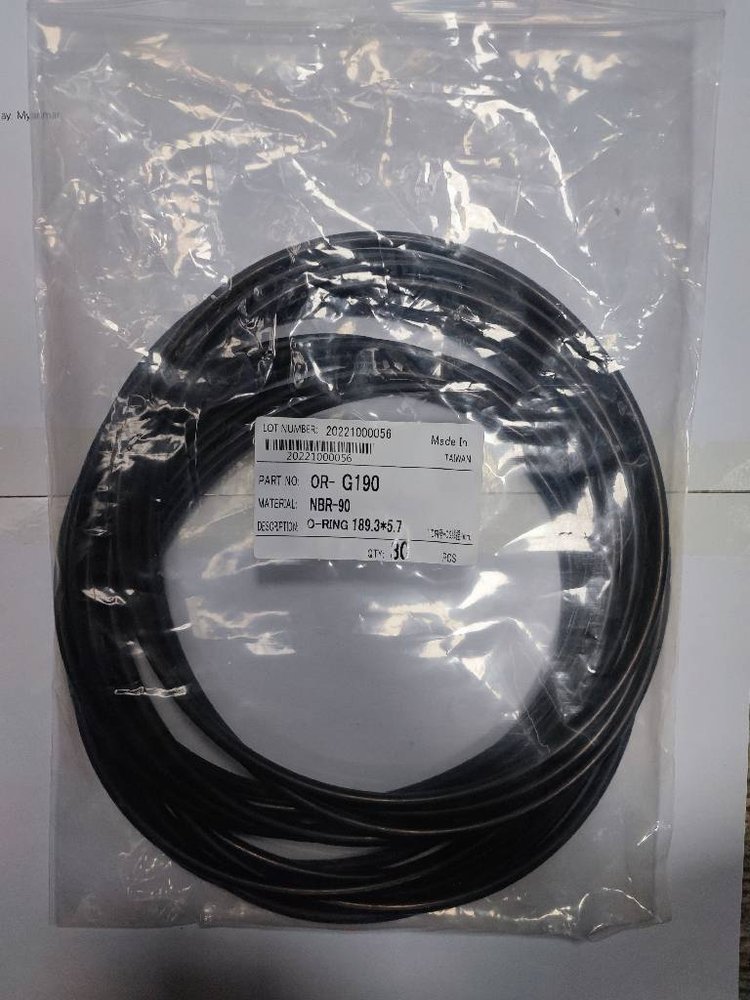
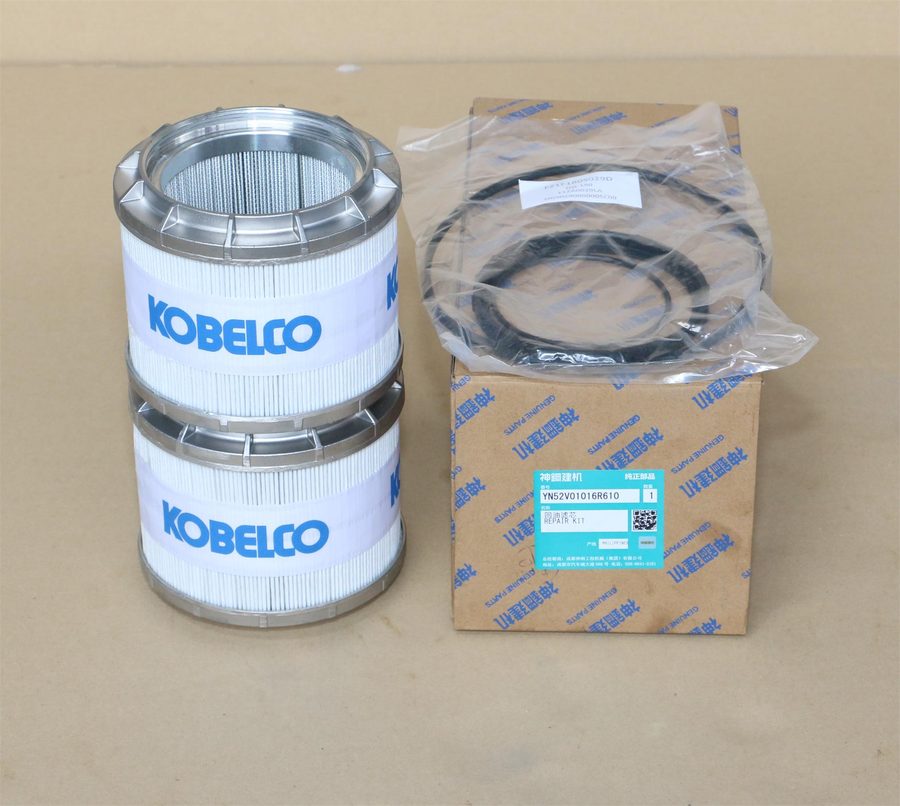
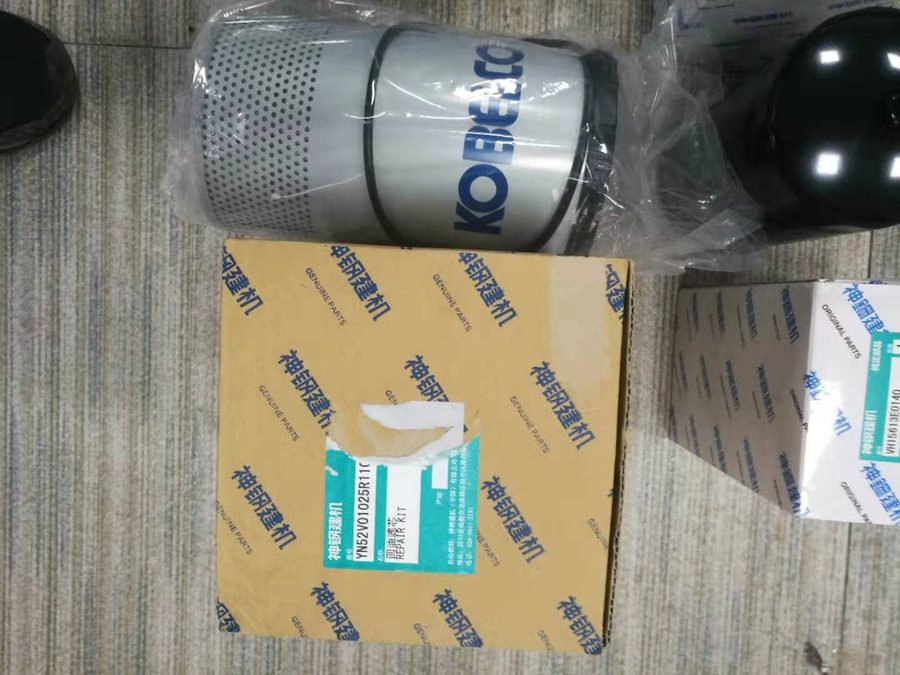
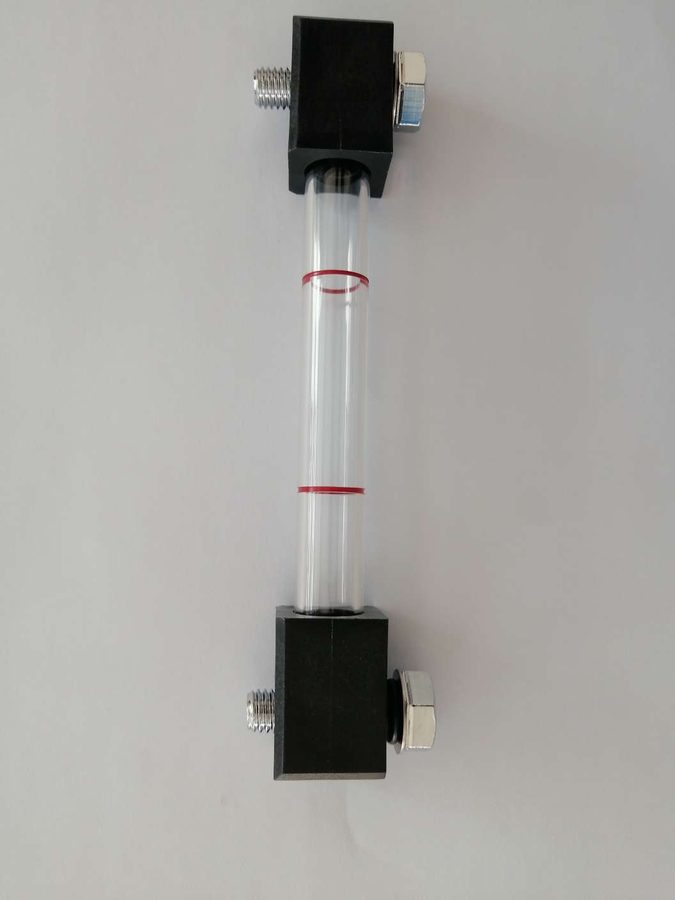
Every hydraulic system line we hold in Guangzhou, listed by part number with its current quantity. 31 part numbers, 628 pieces on the shelf. Click any line for photos, interchangeable numbers and machine fitment.
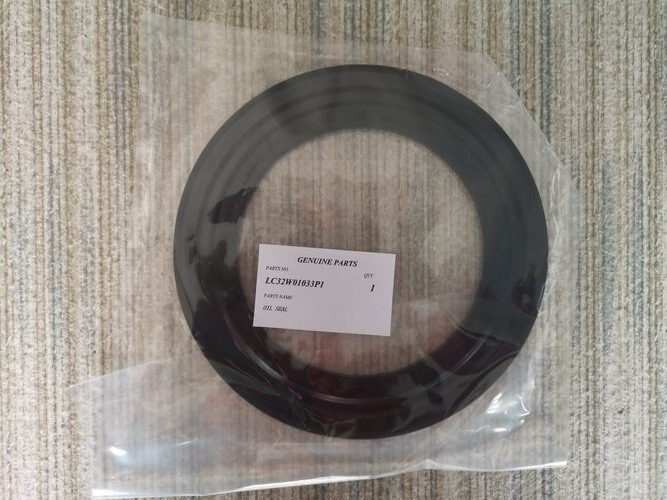
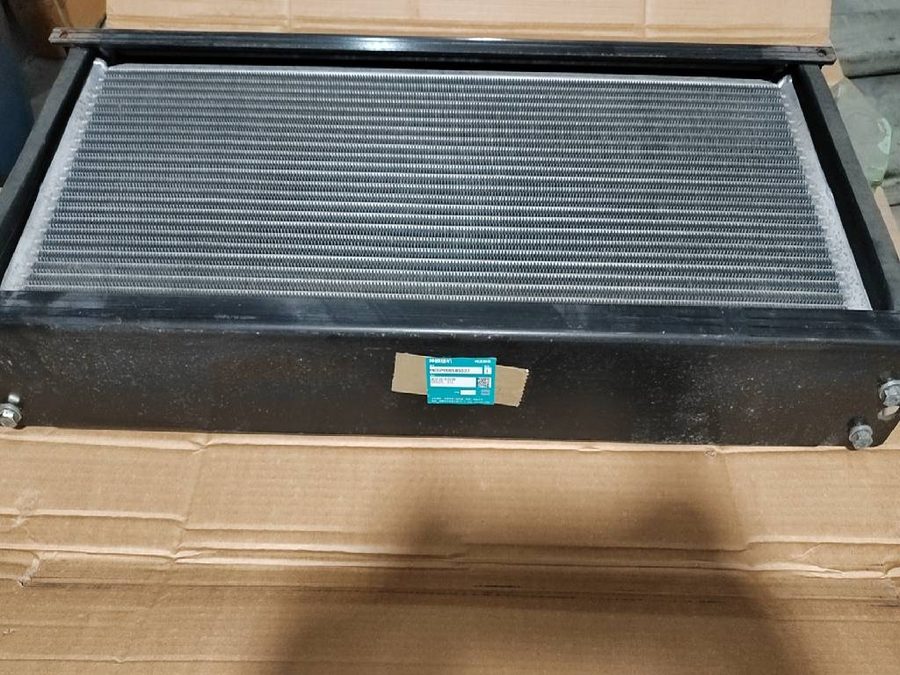
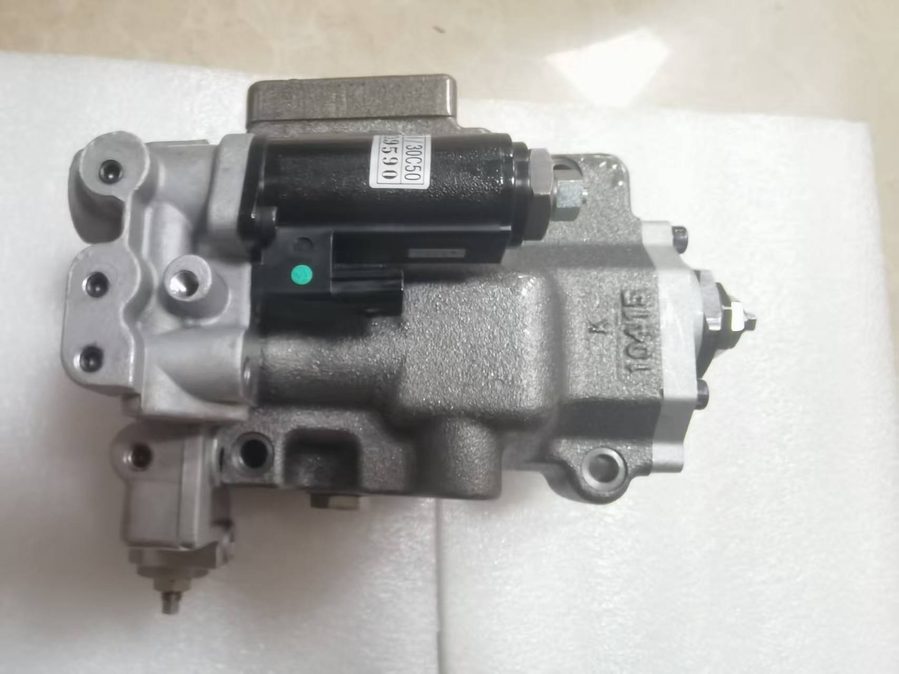
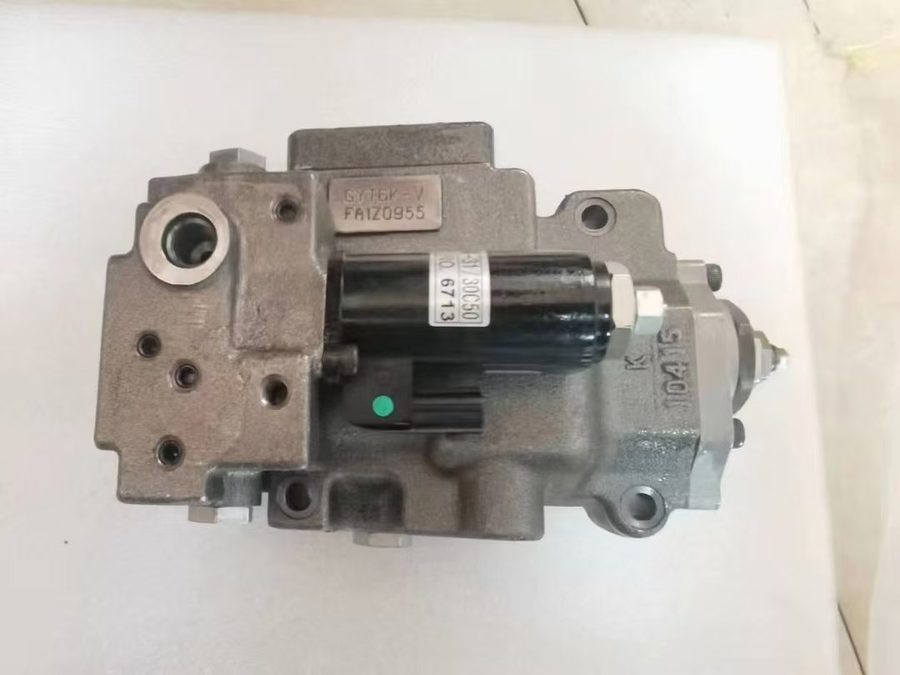
What we need from you to ship the right part first time — and the mistakes that cause returns in this category.
Pull a straight-travel reading and a pilot-pressure reading first. If pilot pressure is low, the fault is upstream — pilot filter or pilot pump. If pilot pressure is correct but main pressure is low and the machine is uniformly slow, the regulator is the first suspect and is far cheaper than a pump. If you also find metal in the oil or a rising case-drain flow, the rotating group is worn and the pump must be replaced. Send us the readings and we will tell you which route to take.
It describes the pump build: D for double pump, T for tandem arrangement, and P for the regulator or control package fitted. Two pumps with the same 140 cc/rev displacement but different suffixes are mechanically similar and hydraulically not interchangeable — the regulator package is what decides how the pump responds to a pilot signal. This is why we always ask for the full nameplate code rather than just K5V140.
Yes if the pump failed mechanically. A failed rotating group releases metal into the oil, and that oil reaches the cooler, the lines and the valve bank. Renewing the pump without flushing leaves that debris in the circuit and it will score the new pump within hours. At minimum, flush the tank and lines, replace return and suction filters, replace the pilot-inline filter and have the cooler cleaned or replaced.
Drift means oil is escaping from the cylinder circuit that should be holding pressure. The two usual causes are a leaking relief valve in that section and a worn control-valve spool. Change the relief cartridge first — it is a small part and often solves it. If drift remains, the control valve section needs to be measured or exchanged. Drift plus heat is a stronger sign of spool wear; drift alone is more often the relief valve.
We stock hose groups and individual hose assemblies for the SK range, and for the common high-pressure lines we can supply made-up assemblies with the correct end fittings. Send the Kobelco part number or the machine model plus the line position and we will confirm what is available as a complete assembly versus what must be assembled locally.
Return and pilot filters on a production machine should be changed at the interval in the operator manual — commonly every 500 hours for the pilot-inline filter and every 1,000 hours for the return element, but dust-heavy sites justify shortening those intervals. Suction strainers are usually cleaned rather than replaced. Running a return element past its interval is a false economy: once the bypass opens, unfiltered oil circulates and pump wear accelerates.